


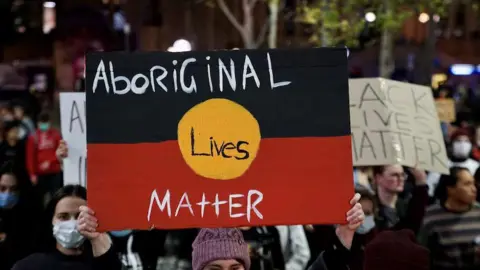
The count of Indigenous people dying while in custody in Australia has hit its highest point since the beginning of records began in 1980.
Recently released figures indicate that 33 of the 113 people who passed away in detention in the year leading up to June were Indigenous. This marks an increase from 24 deaths in the previous corresponding period.
Indigenous Australian people are severely overrepresented in the justice system. They constitute over 33% of all incarcerated individuals, even though comprising under 4% of the country's people.
These concerning figures come to light more than three decades after a pivotal royal commission into First Nations deaths in custody, which put forward hundreds of recommendations.
Detailed Analysis of the Latest Figures
Of the 33 Indigenous deaths in custody logged between last July and this June, twenty-six occurred while in a correctional facility, which is an rise from 18 in the prior year.
One death was in a juvenile facility, and all except one of the deceased were male.
The remaining six deaths happened in the custody of law enforcement, defined as when someone dies while police are holding or attempting to detain them.
The primary reason of Indigenous deaths was categorised as "self-inflicted," followed by "illness." The report noted that asphyxiation was the cause in eight of the cases.
Geographic Distribution
The Australian state of New South Wales had the highest number of Indigenous deaths in correctional facilities with nine, followed by Western Australia with six. Queensland, South Australia, and the Australian Capital Territory all recorded three deaths.
The growing number of First Nations deaths in custody in this state is a "deeply distressing milestone," the state's coroner has remarked.
In October, Magistrate Teresa O'Sullivan emphasised that this upward trend was not "just statistics" and that these deaths required "thorough and careful scrutiny, dignity and accountability."
Profile Information and Expert Response
The mean age of those who died was 45, and 11 of the deceased were still waiting for a sentence.
A criminal law associate professor, Amanda Porter, described the figures as reflecting a "country-wide emergency" that requires "decisive action and government action."
Ms. Porter, who has attended several coronial inquests with grieving families, said little has improved since the 1991's royal commission that aimed to tackle this issue.
"It's maddening to witness the quantity of investigations I attend, the many funerals families have to attend, and the fact that we are three decades past the royal commission, and the situation is getting progressively worse," she commented.
Since the landmark inquiry, a total of 600 First Nations people have lost their lives in custody, which includes six in youth detention, as per the report.